
 Book Now
What Shape Breast Implants Are Best For Me ? (Round or Anatomic Shaped?)
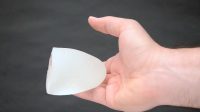
Studies have proven the difference between round and shaped implants of the same size is undetectable in many women, therefore either round or anatomic shapes produce a similar result. In the upright (standing) position, round implants assume an anatomic shape. However, shaped implants are different than round devices not only in shape, but also in texture. To maintain their shape, anatomic implants are less fluid, more viscous, semi-solid, cohesive, or “form stable.” Their “gummy bear” type texture ripples less than traditional silicone gel implants. Because of their texture and/or their shape, anatomically contoured devices are a superior choice for some women. In deciding which shape is preferred for you, your desired result is considered, as well as specific chest wall, breast, and skin characteristics.
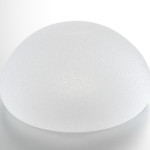
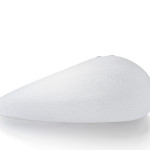
Anatomic vs round breast implants

Anatomical shaped implants behave differently in your body than round implants. While round implants tend to assume an anatomic shape when upright, the fullness they maintain at the upper breast depends on your skin surface area, skin elasticity, volume of your natural breast, and distribution of your breast tissue.
Because shaped implants are less fluid, the upper portion of the implant (tapered end) when upright does not settle down gravitationally. For someone with a tighter skin envelope, a round implant will maintain fullness of the upper breast in standing position. For women with a relaxed skin envelope, the shaped implant maintains fullness of the upper breast when standing better than most round silicone gel breast implants. Anatomic shaped implants may have a round base, an elliptical base with a horizontal axis for women with wide breasts and/or a broad chest, or an elliptical base with a vertical axis for tall women or women desiring naturally sloping fullness of the upper breast.
To maintain their anatomic shape, these implants are filled with cohesive or highly cohesive silicone gel, and have a thick and/or “gummy bear” type consistency. These implants provide predictable shape and projection, and are available in a sufficiently large variety of shapes and sizes to fit most combinations of breast shape, size, and skin elasticity very well. There are many implant styles still awaiting FDA approval to fulfill the requirements for even more women.
Round vs. Shaped Breast Implants
Each of the three companies marketing FDA approved breast implants in San Diego offers a vast array of sizes and shapes to meet the needs of most women. Because each woman has a unique combination of breast size and shape, chest size and shape, desired result, and personal preferences, the breast augmentation procedure usually involves both careful selection of the implant that will best fit each woman, and then breast and chest adjustment to best fit the selected implant.
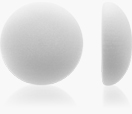
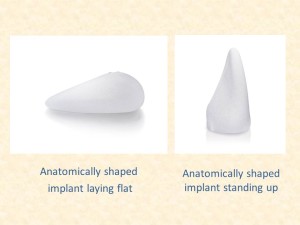 Round implants offer fullness of the upper breast for women with “tight” skin envelopes, and change shape easily with positional changes. Round implants are available with both smooth and textured surfaces. Smooth surface round implants can rotate freely within their pocket without change in the visible breast contour. For women who desire large augmentation, it may be difficult to achieve a natural shape with round implants because of upper breast fullness.
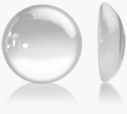
Shaped (“tear drop”) implants offer less fullness of the upper breast for women with a tight skin envelope, but more upper fullness for women with a loose skin envelope. Because some shaped breast implants project maximally below the breast meridian (mid-portion of the breast), these prostheses are uniquely suited for women whose nipple-areola are low on the breast and who do not want a formal breast lift to accompany augmentation. Dr. Laverson uses shaped implants for women with elliptical breasts because the footprint of these implants more closely matches the breast being augmented. Using implants that match the woman’s native breast shape avoids surgical maneuvers to reshape the woman’s breast to fit an implant that doesn’t match. These re-shaping maneuvers can detract from the final result by changing the breast shape so it is un-natural, so it “doesn’t feel right” to the woman, and may cause visibility of the breast implant interface with native breast tissue, an undesirable aesthetic feature. Shaped implants always have a textured surface to prevent implant rotation. They are available with both saline and silicone gel fill, and must be selected carefully to match the woman’s pre-surgical breast with her aesthetic goals.
Disadvantages Of Anatomically Shaped Implants
One disadvantage of anatomically shaped implants is that because they’re less pliable, they cannot be passed through a small opening and properly oriented, so insertion through the armpit or a small areola may not be possible. Round implants with higher profiles produce a voluptuous breast shape that is desirable for many, but they do not fit all breasts well. If there is mild post-pregnancy settling down of the nipple toward the lower breast, shaped implants may better permit augmentation without a formal breast lift. Likewise, women with a broad chest whose breasts are situated low, just above the rib margins, may achieve more comfort and a more natural look with transversely oriented elliptical devices which prevent lowering of the infra-mammary crease that may be required for round implants in such patients.
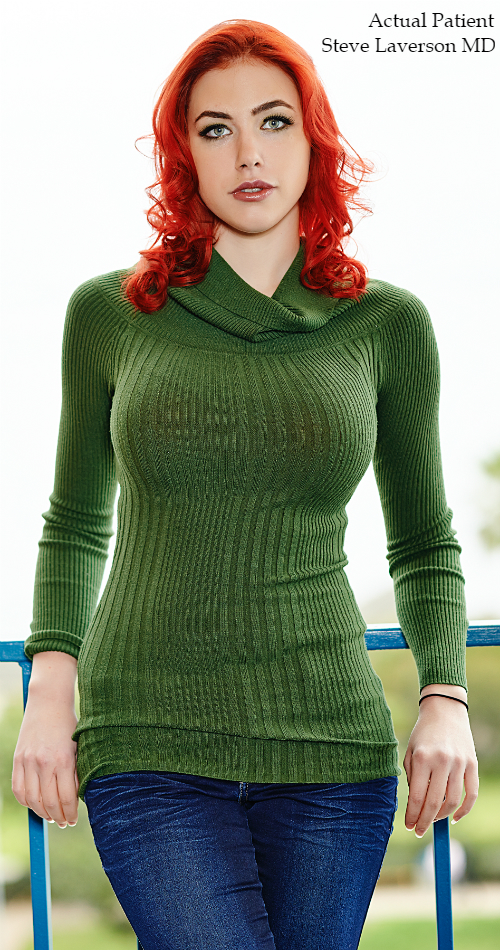
Dr. Steve Laverson has worked extensively with both round and with anatomically shaped saline and silicone gel implants and will suggest the device that best matches your situation and your preferences.
Silicone gel is a polymer (type of chemical) that may be produced in a variety of consistencies. The silicone gel filler of breast implants is high viscosity, and cohesive. If cut in half, gel does not leak out and disseminate in the chest or elsewhere. Cohesive gel implants easily deform when pressure is applied, and they change disposition with the woman’s posture. They are soft to touch. Silicone may also be “highly cohesive”, in which case the implant still feels soft, but more solid than regular cohesive gel devices. Highly cohesive implants have a texture similar to “gummy bear” candies. Highly cohesive breast implants maintain their shape regardless of chest posture, and are thus “form stable.” Highly cohesive implants are Style 410, manufactured by Allergan® and marketed as the Natrelle® brand.
The fact that these implants are placed behind the breast very much affects what they feel like after surgery. The more breast tissue you have before augmentation, the more your final result will feel like your breasts always have. The greater the percentage of implant in your final breast volume, the more your breast will feel like the implant. In many years of performing breast augmentation, Dr. Laverson believes both saline and gel implants feel very natural. The primary cause of un-natural texture is advancing capsular contracture, which causes implant enhanced breasts to become firm, or in advanced cases, hard.
Saline (salt water) breast implants ship sterile from the manufacturer, and arrive in Dr. Laverson’s operating room as empty solid silicone shells. During breast enhancement surgery, saline implants are carefully removed from their package, air is evacuated from the sterile implant, and the device is inserted into a pocket developed by Dr. Laverson behind the breast. The implant is filled with sterile iso-osmolar (identical to human plasma) salt water to its recommended final volume through a specialized valve. The implant is positioned and oriented properly, and all women are then examined in the sitting position to confirm a good relationship between implant location and breast disposition.
Silicone gel implants are also packaged sterile, but have no valve on their surface. Gel implants are delivered to Dr. Steve Laverson for breast enlargement San Diego completely filled to the selected size with cohesive or highly cohesive silicone gel. At surgery, gel implants are removed from their packaging and inserted into a space behind the breast. The result is immediately apparent because the implant comes pre-filled. Proper relationship between implant location and the overlying breast is confirmed in the sitting position.
Some women prefer saline implants, and gel is more suitable for others. They are both high quality implants, and none proven to last longer. Saline implants are less expensive. Highly cohesive implants are more expensive. For women with B cup breasts and larger, Dr. Laverson believes that texture of saline and gel implants is similar, and difficult to distinguish. For women who are very lean, thin, or small breasted, gel may be preferred because its higher viscosity (compared to saline=salt water) produces a more natural texture. More viscous gel (compared to saline) diminishes the tendency toward visible and/or palpable (detectable by touch) rippling in certain positions.
An additional difference between gel and saline devices: What happens if the implant shell ruptures? Saline implants deflate as the sterile salt water is absorbed. The woman with saline implants knows almost immediately that her implant has ruptured. She wants a new implant to replace the deflated one. Both saline implant manufacturers (Allergan and Mentor) provide a warranty on their prostheses, so save your implant information in order to get an identical replacement if one side deflates. If a gel implant ruptures, cohesive silicone gel does not leak out, but is contained within the implant shell and the surrounding capsule of scar. Most women with ruptured gel implants do not know immediately of any problem. For this reason, implant manufacturers and the FDA advise women with gel implants to check implant integrity periodically with an MRI (magnetic resonance imaging) study. While recommended, these studies are NOT required. It is strongly recommended however, that if you discover your gel breast implant has ruptured, it should be removed or replaced.
Breast augmentation with saline implants
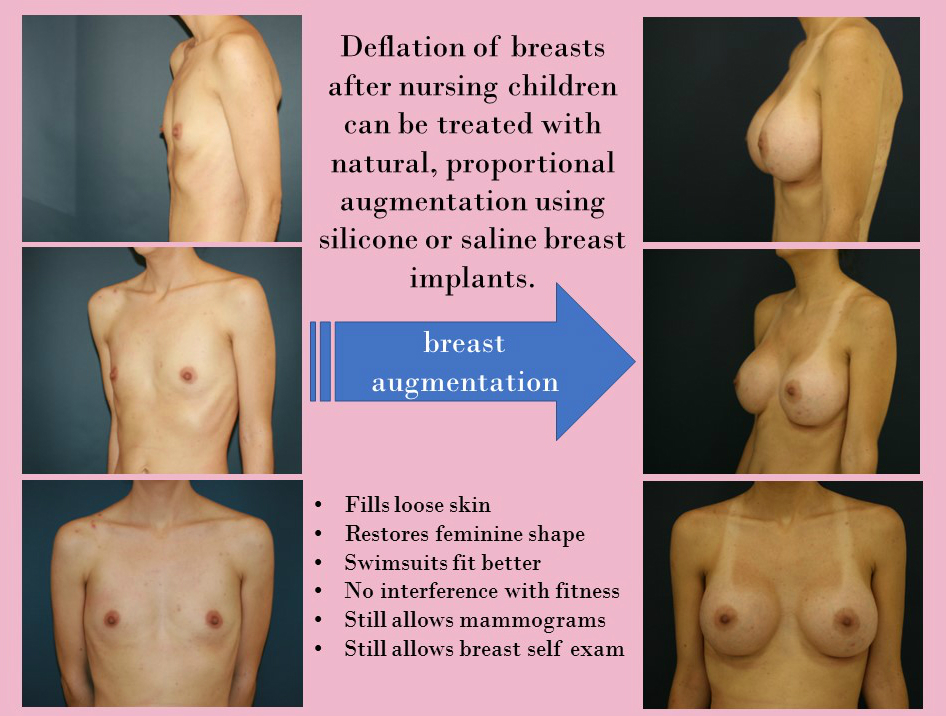

Ask us now or book your consultation.
Contact Us
Contact Us


Subscribe to Our Newsletter!
Subscribe
Subscribe


Address:

Phone: